The eJournal of the Institut Agama Hindu Negeri Mpu Kuturan is an integrated journal management system that allows editors to manage and organize their journals so that they can work more efficiently and effectively, especially in teams.
Digital Object Identifier (DOI) registered with CrossRef. DOI prefix is: 10.55115
Journals
-
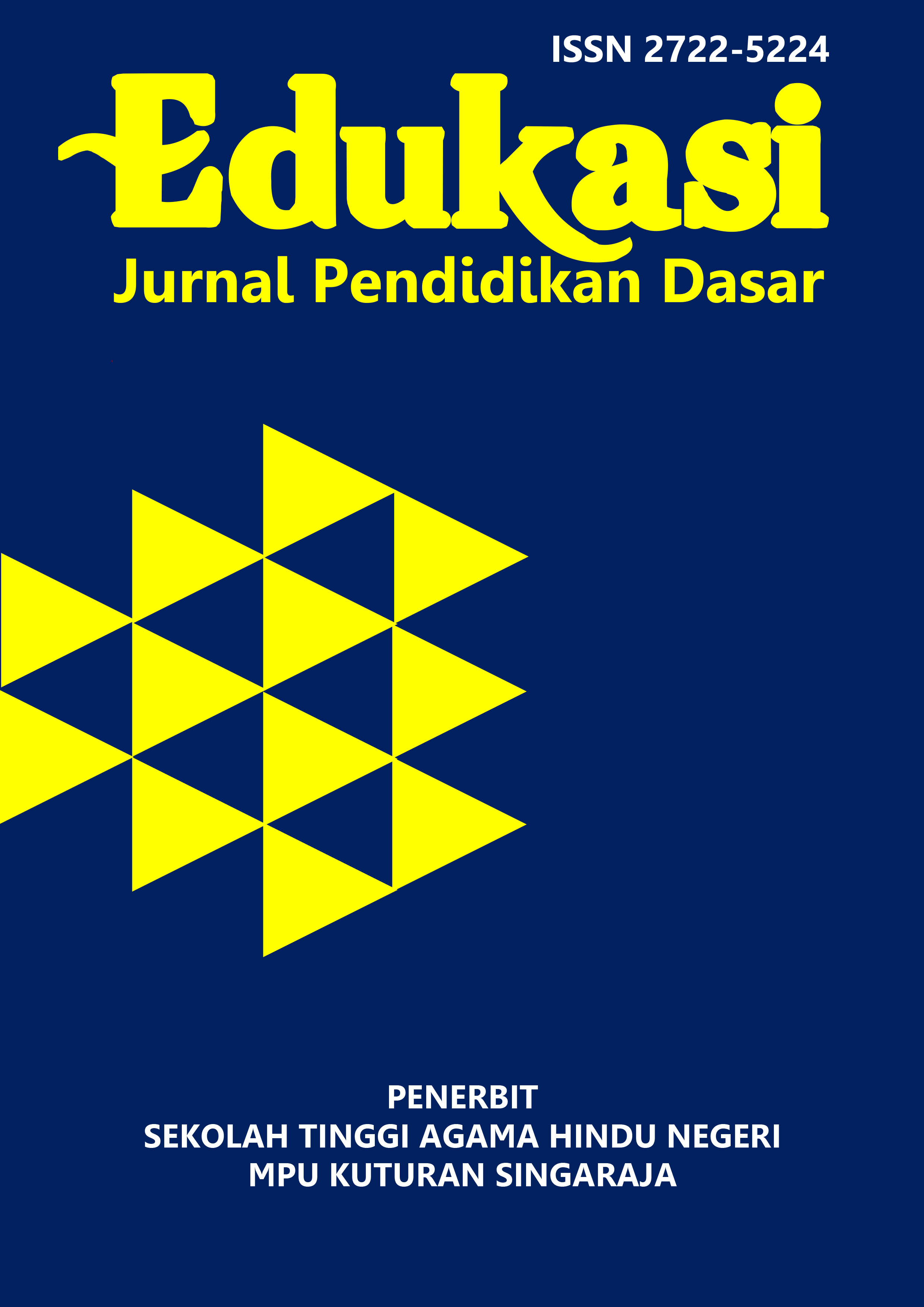
Edukasi: Jurnal Pendidikan Dasar
Edukasi: Jurnal Pendidikan Dasar is an peer-reviewed journal dedicated to interchange for the results of high quality research in all aspect of elementary education. The journal publishes state-of-art papers in fundamental theory, experiments and simulation, as well as applications, with a systematic proposed method, sufficient review on previous works, expanded discussion and concise conclusion.
-
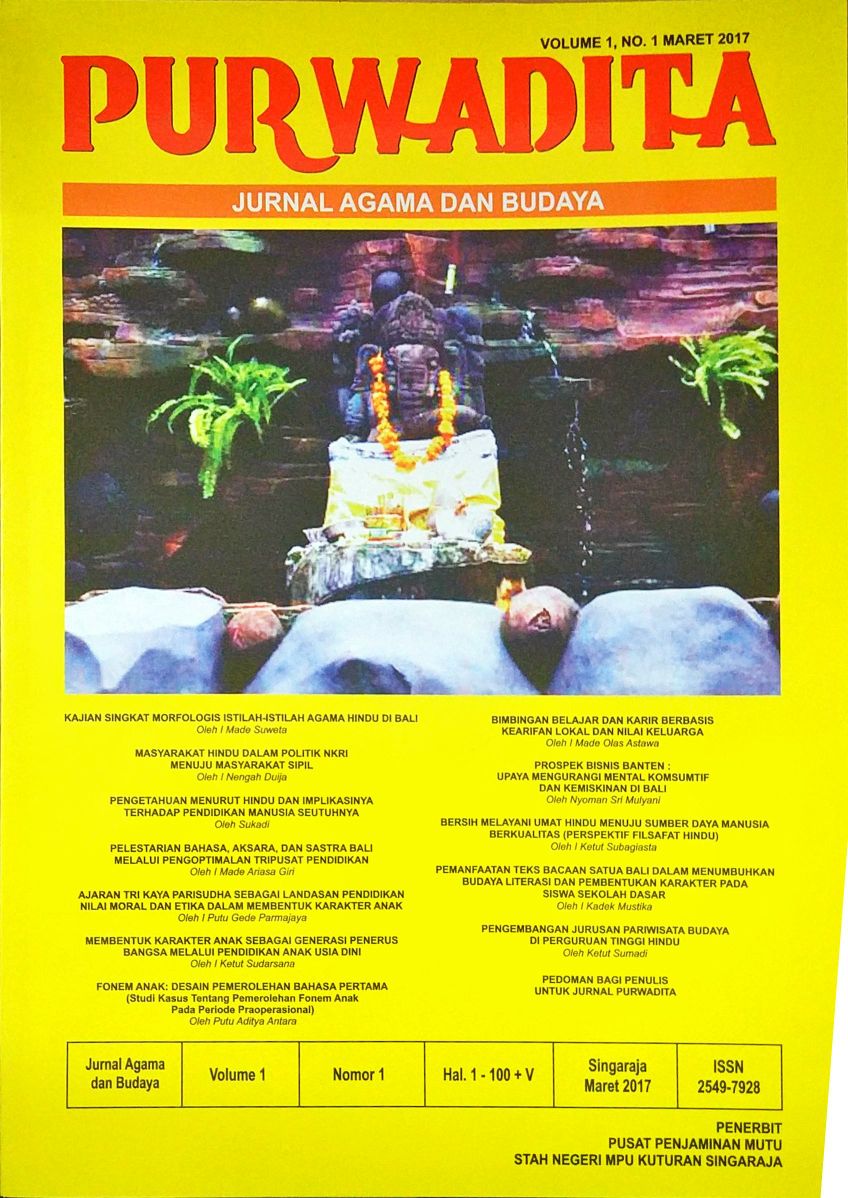
Purwadita : Jurnal Agama dan Budaya
Purwadita: Jurnal Agama dan Budaya is an peer-reviewed journal dedicated to interchange for the results of high quality research in all aspect of Religious and Cultural Studies. The journal publishes state-of-art papers in fundamental theory, experiments and simulation, as well as applications, with a systematic proposed method, sufficient review on previous works, expanded discussion and concise conclusion.
-
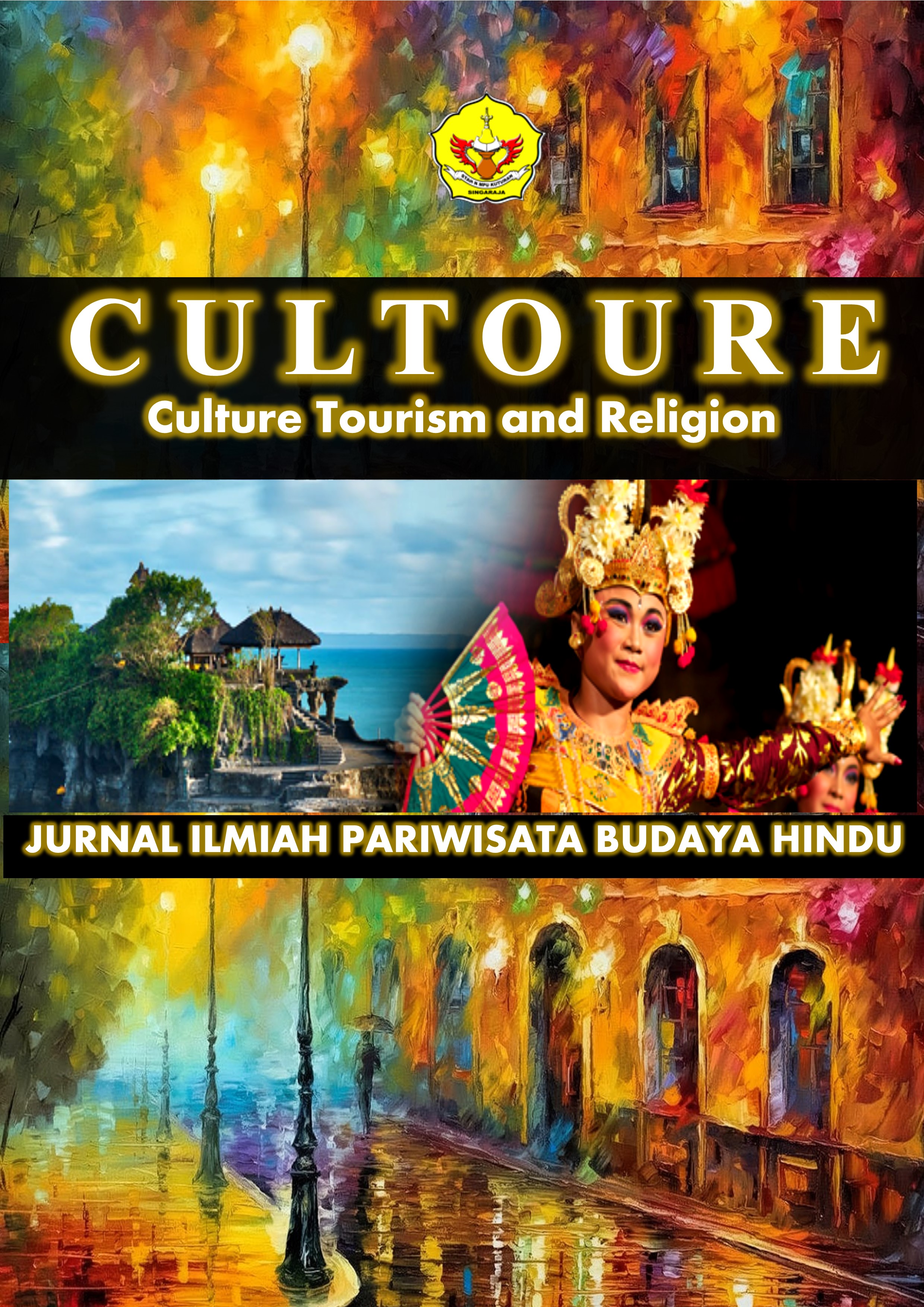
Cultoure: Jurnal Ilmiah Pariwisata Budaya Hindu
C U L T O U R E: Jurnal Ilmiah Pariwisata Budaya Hindu focuses on publishing scholarly works in the fields of tourism and Hindu culture. The journal aims for the published ideas to contribute positively to the advancement of knowledge, particularly in tourism and Hindu cultural studies. Cultoure is published twice a year, in April and October, by the Hindu Cultural Tourism Study Program at the State Hindu College of Mpu Kuturan Singaraja. -
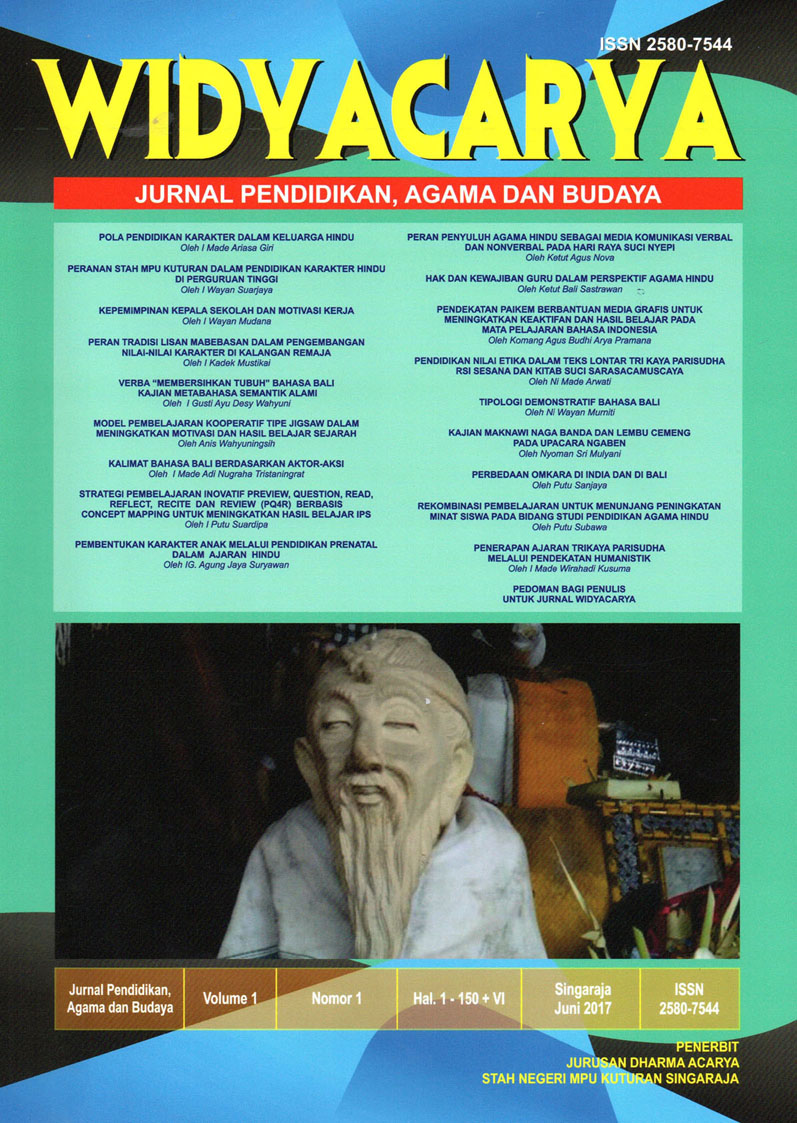
Widyacarya: Jurnal Pendidikan, Agama dan Budaya
-
Genta Hredaya: Media Informasi Ilmiah Filsafat Hindu
-
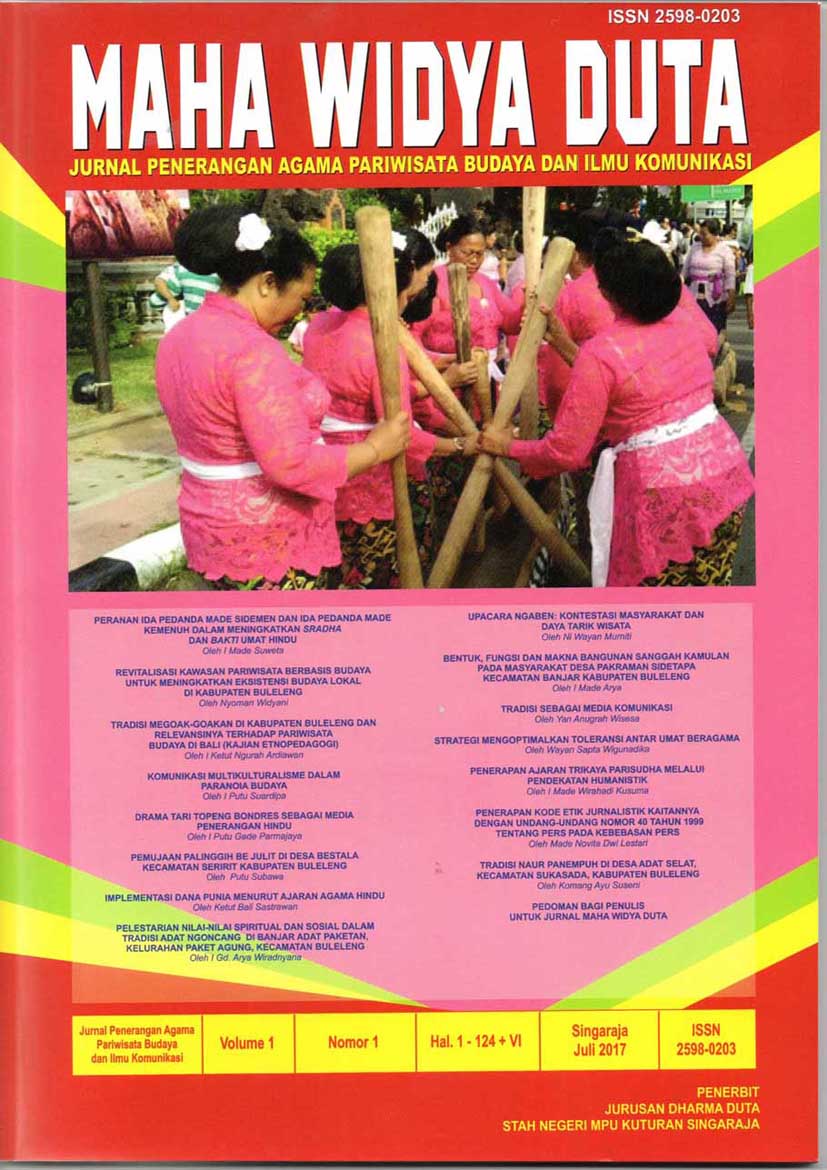
Maha Widya Duta : Jurnal Penerangan Agama, Pariwisata Budaya, dan Ilmu Komunikasi
Maha Widya Duta: Jurnal Penerangan Agama, Pariwisata Budaya, dan Ilmu Komunikasi memfokuskan pada bidang penerangan agama, pariwisata budaya, dan ilmu komunikasi. Pemikiran-pemikiran ilmiah yang terpublikasi dalam jurnal ini diharapkan memberikan kontribusi positif bagi pengembangan ilmu pengetahuan. Jurnal ini terbit setahun dua kali yakni pada bulan April dan Oktober.
-
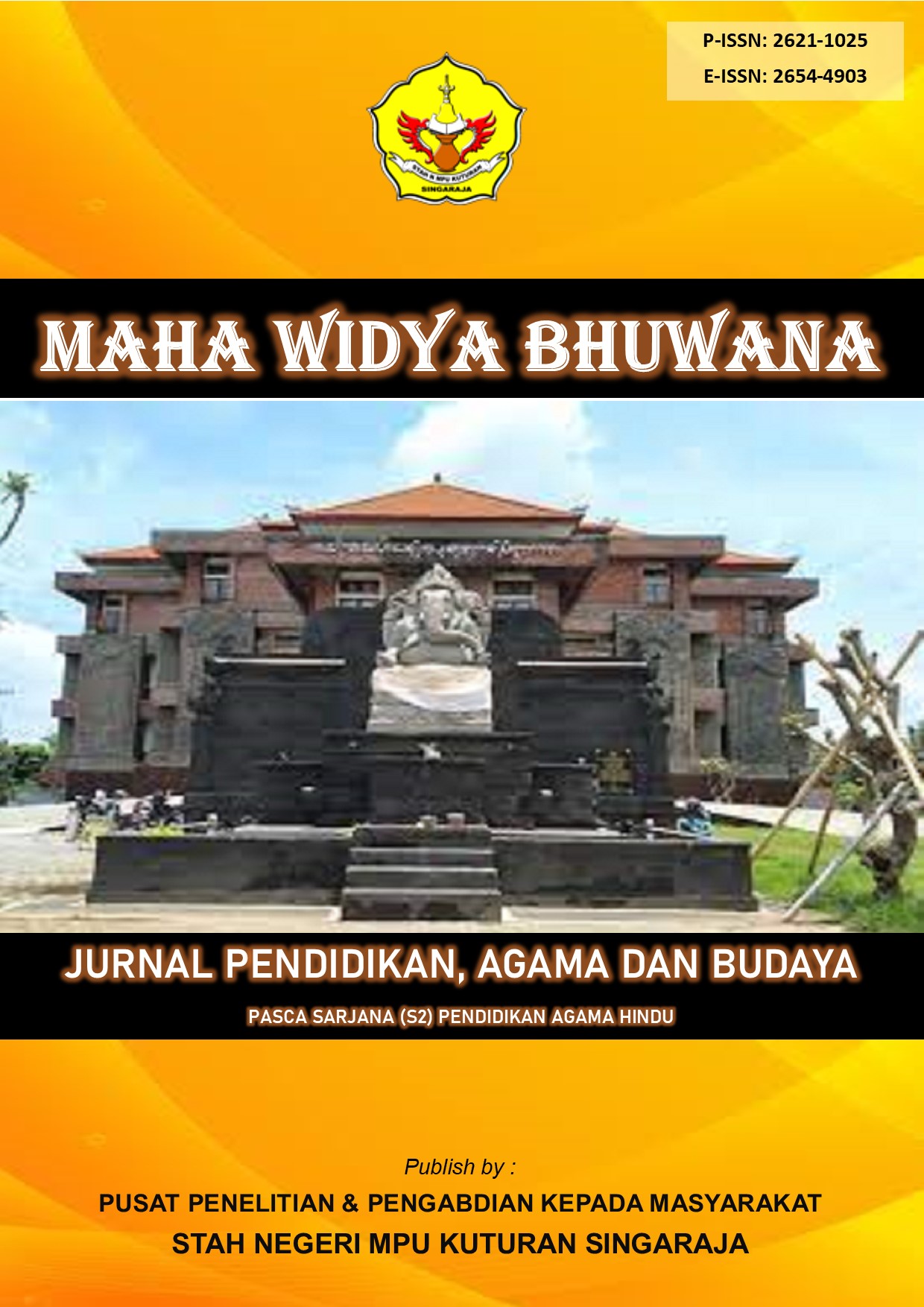
Maha Widya Bhuwana: Jurnal Pendidikan, Agama dan Budaya
Maha Widya Bhuwana : Jurnal Pendidikan, Agama dan Budaya dikelola oleh STAHN Mpu Kuturan Singaraja yang dijadikan referensi dan kajian ilmiah dalam menganalisis serta memecahkan berbagai masalah pendidikan, Agama Hindu dan budaya yang semakin kompleks
p-ISSN : 2621-1025 (Printed)
e-ISSN : 2654-4903 (Online) -
Pariksa: Jurnal Hukum Agama Hindu
Pariksa : Jurnal Hukum Agama Hindu dikelola oleh Jurusan Dharma Sastra yang merupakan sumber inspirasi dan referensi dalam upaya pengembangan kualitas umat Hindu di bidang intelektual, emosional, dan juga spiritual sehingga umat Hindu dapat turut berperan serta dalam membangun bangsa Indonesia menuju kehidupan yang aman, tentram, dan damai
p-ISSN : 2598-2850 (Printed)
e-ISSN : 2746-7627 (Online) -
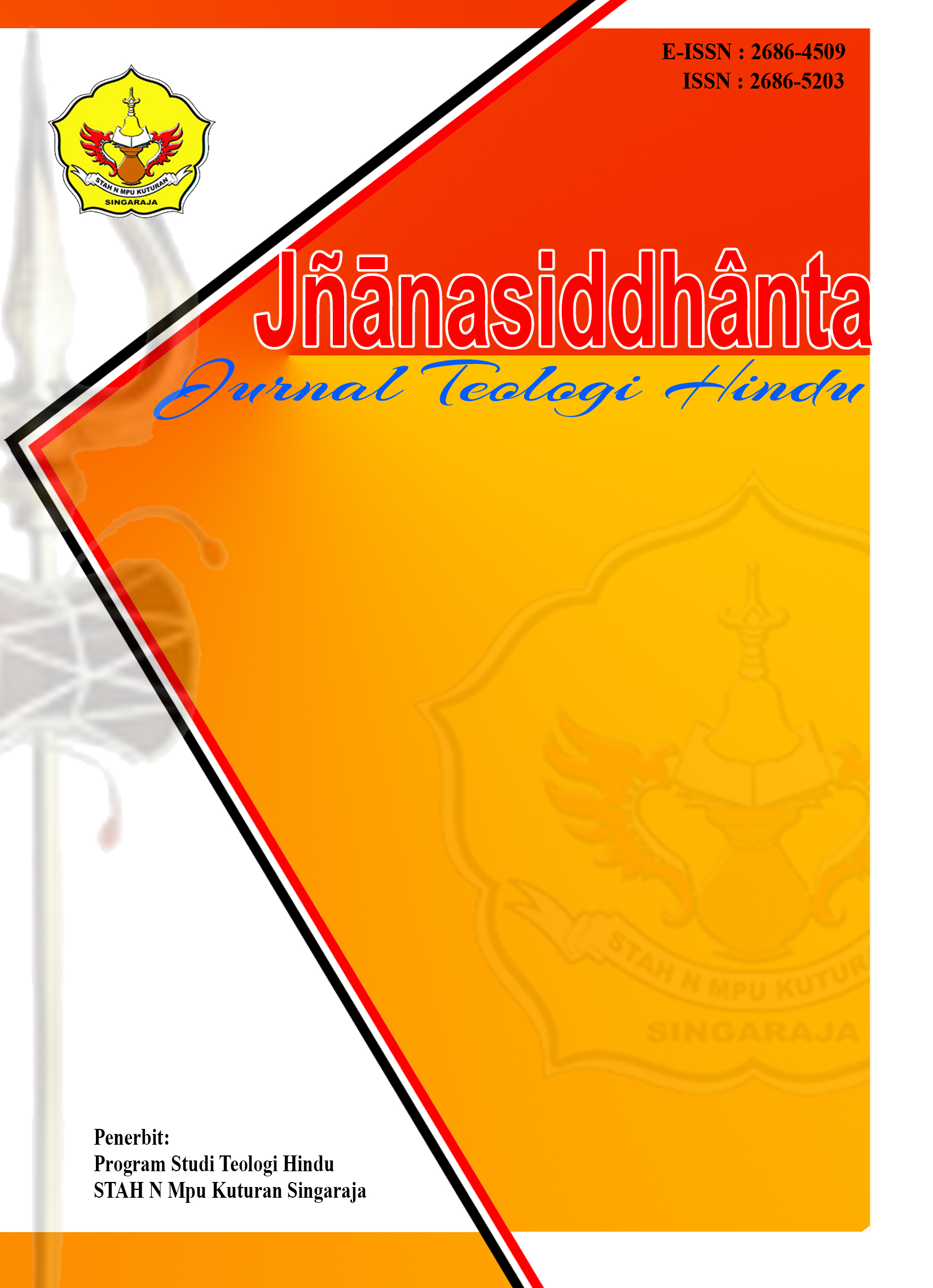
Jnanasiddhanta : Jurnal Teologi Hindu
-
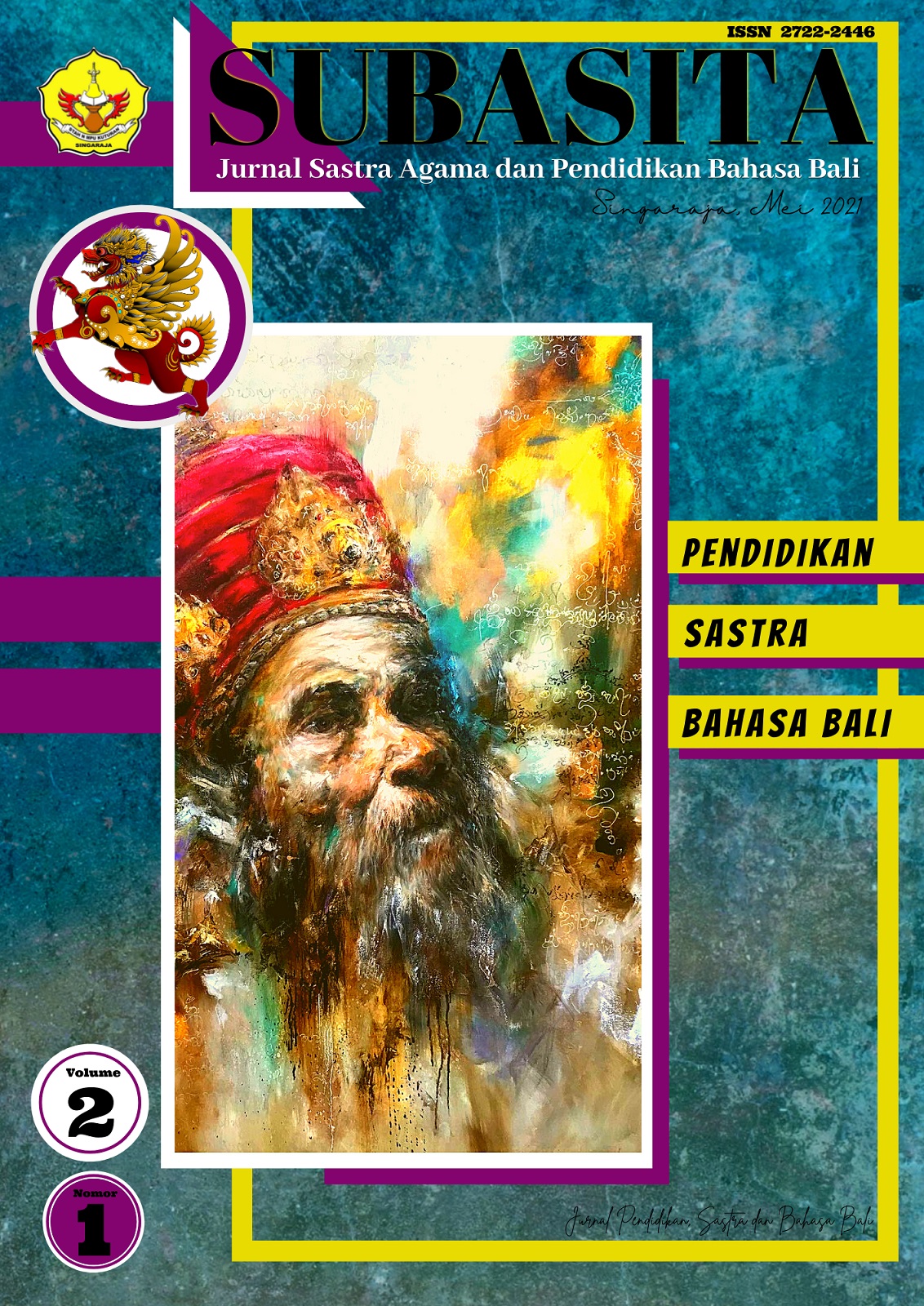
Subasita: Jurnal Pendidikan, Bahasa, Aksara dan Sastra Daerah
Subasita : Jurnal Pendidikan, Bahasa, Aksara dan Sastra Daerah adalah jurnal ilmiah merupakan media literasi yang memuat, hasil penelitian, studi mendalam, oleh para ahli dibidangnya yang berfokus pada masalah pendidikan, bahasa, aksara dan sastra daerah, yang kemudian diterbitkan oleh STAHN Mpu Kuturan Singaraja.
p-ISSN : 2722-2446(printed)
e-ISSN : 2723-4274 (online) -
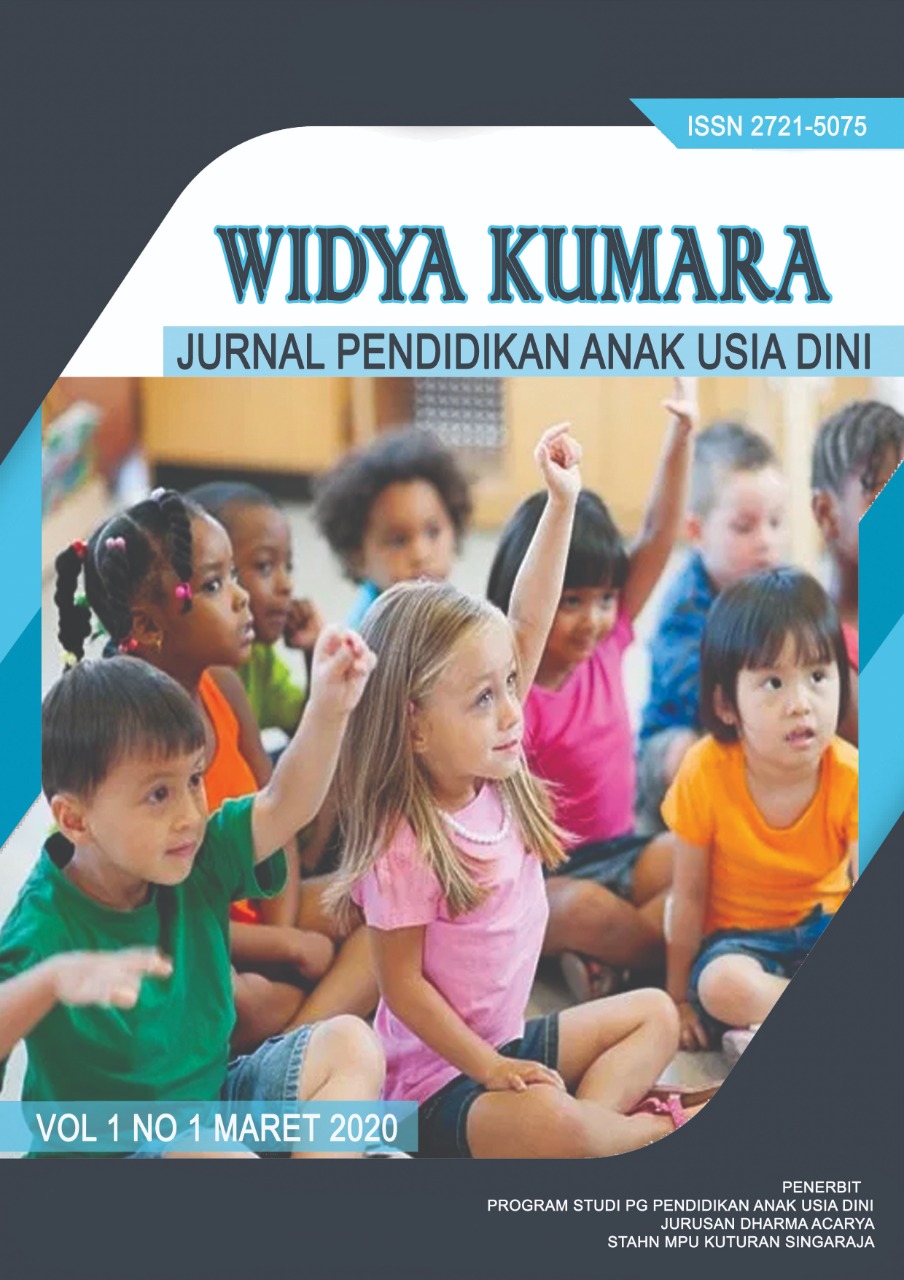
Widya Kumara: Jurnal Pendidikan Anak Usia Dini
Widya Kumara: Jurnal Pendidikan Anak Usia Dini is an peer-reviewed journal dedicated to interchange for the results of high quality research in all aspect of Early Childhood Education. The journal publishes state-of-art papers in fundamental theory, experiments and simulation, as well as applications, with a systematic proposed method, sufficient review on previous works, expanded discussion and concise conclusion.
-
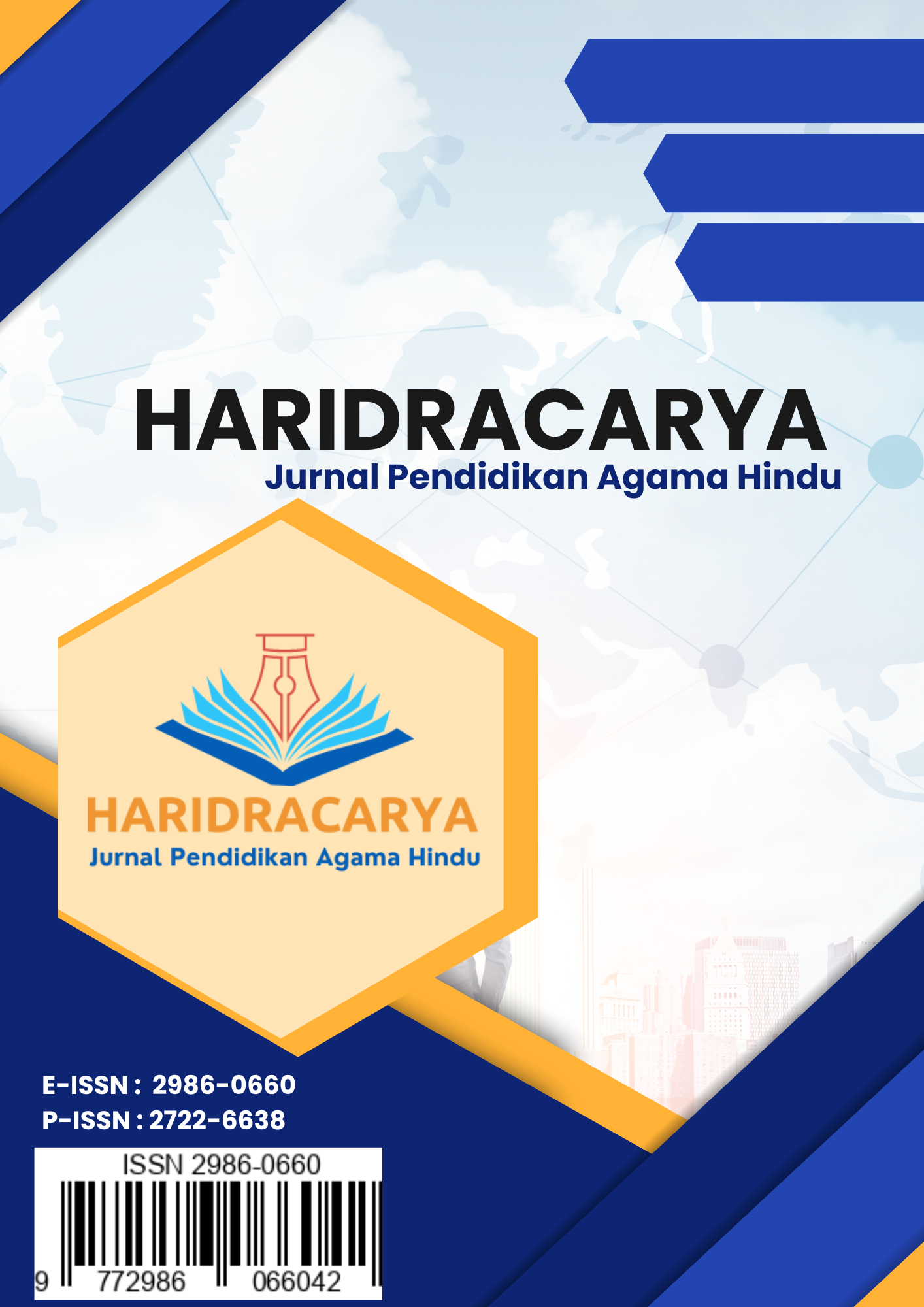
Haridracarya: Journal of Hindu Religious Education
Haridracarya: Jurnal Pendidikan Agama Hindu adalah jurnal ilmiah yang berisi dan menyebarluaskan hasil penelitian, studi mendalam, dan ide-ide atau karya inovatif di bidang pendidikan Agama Hindu yang diterbitkan oleh STAHN Mpu Kuturan Singaraja.
p-ISSN : 2722-6638 (Printed)
e-ISSN : 2986-0660 (Online) -
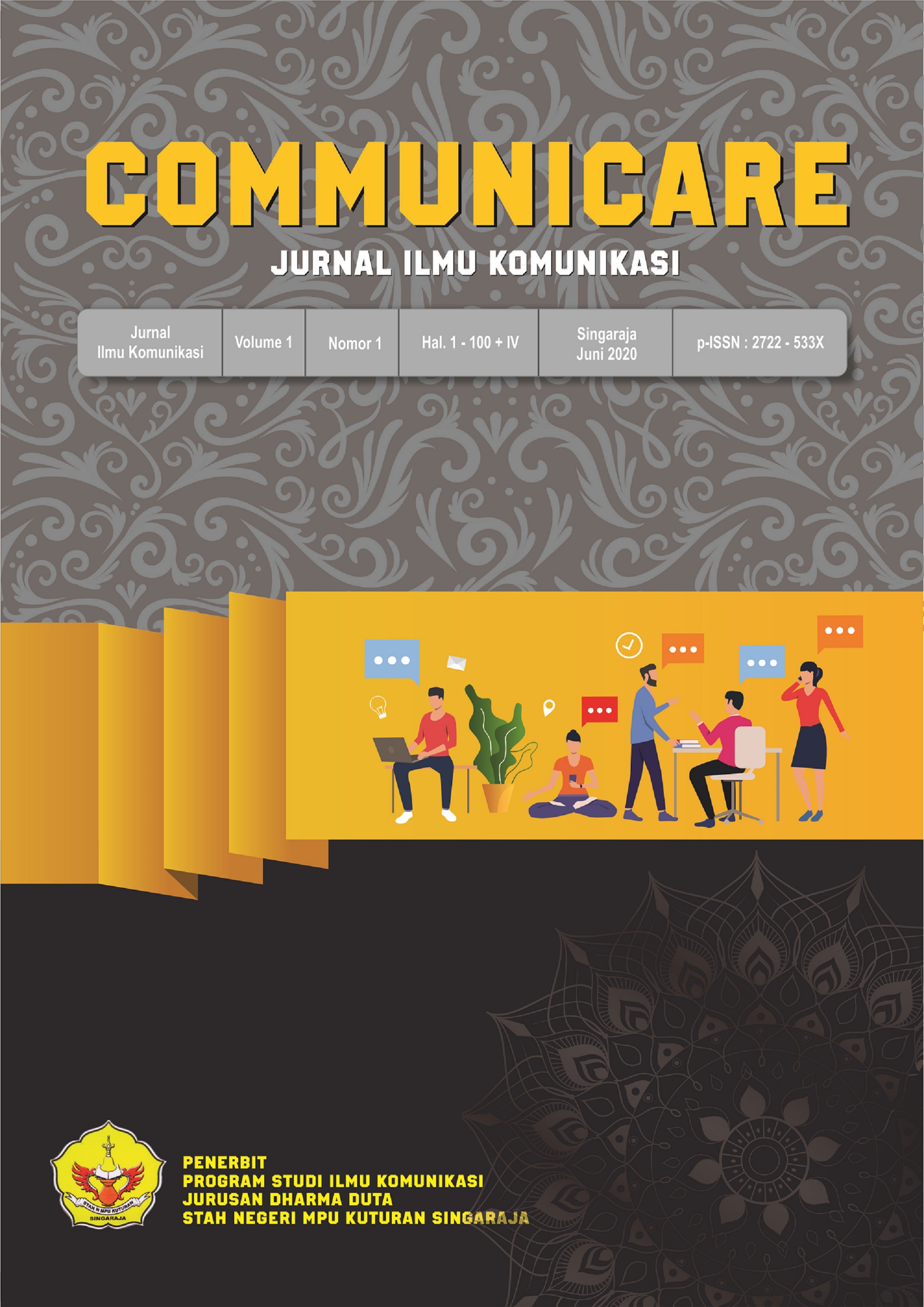
COMMUNICARE
Communicare: Jurnal Ilmu Komunikasi membuka peluang bagi para peneliti untuk menuliskan naskah hasil penelitian dalam lingkup ilmu komunikasi. Naskah diharapkan mengikuti perkembangan ilmu komunikasi dan mampu mendorong pertumbuhan pengetahuan dalam bidang keilmuan.
p-iSSN: 2722-533X (printed) -
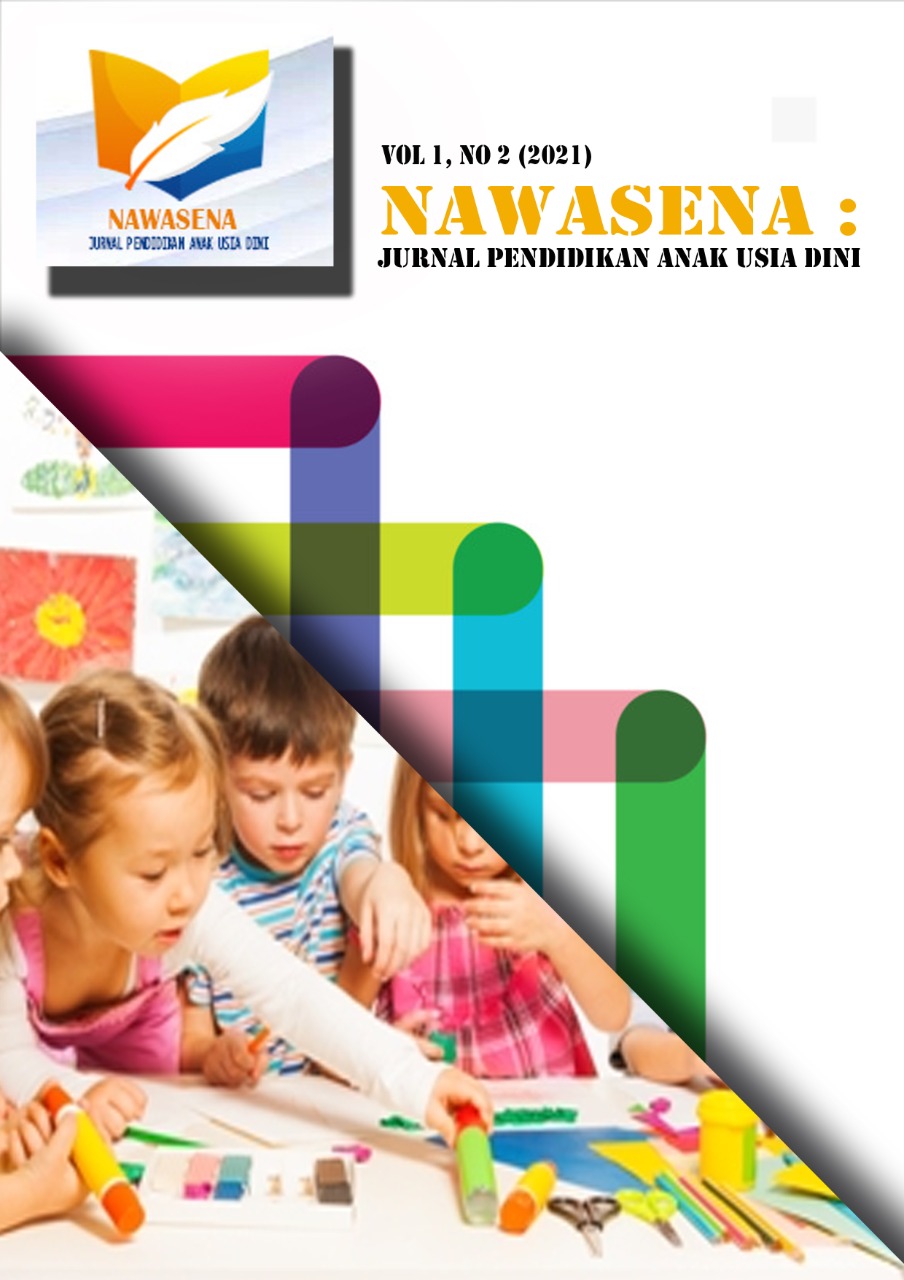
Nawasena: Jurnal Pendidikan Anak Usia Dini
Fokus dan ruang lingkup Jurnal Pendidikan Anak Usia Dini adalah artikel penelitian di bidang pendidikan dan pembelajaran anak usia dini dan artikel terpilih akan di publikasikan di Jurnal Pendidikan Anak Usia Dini
-
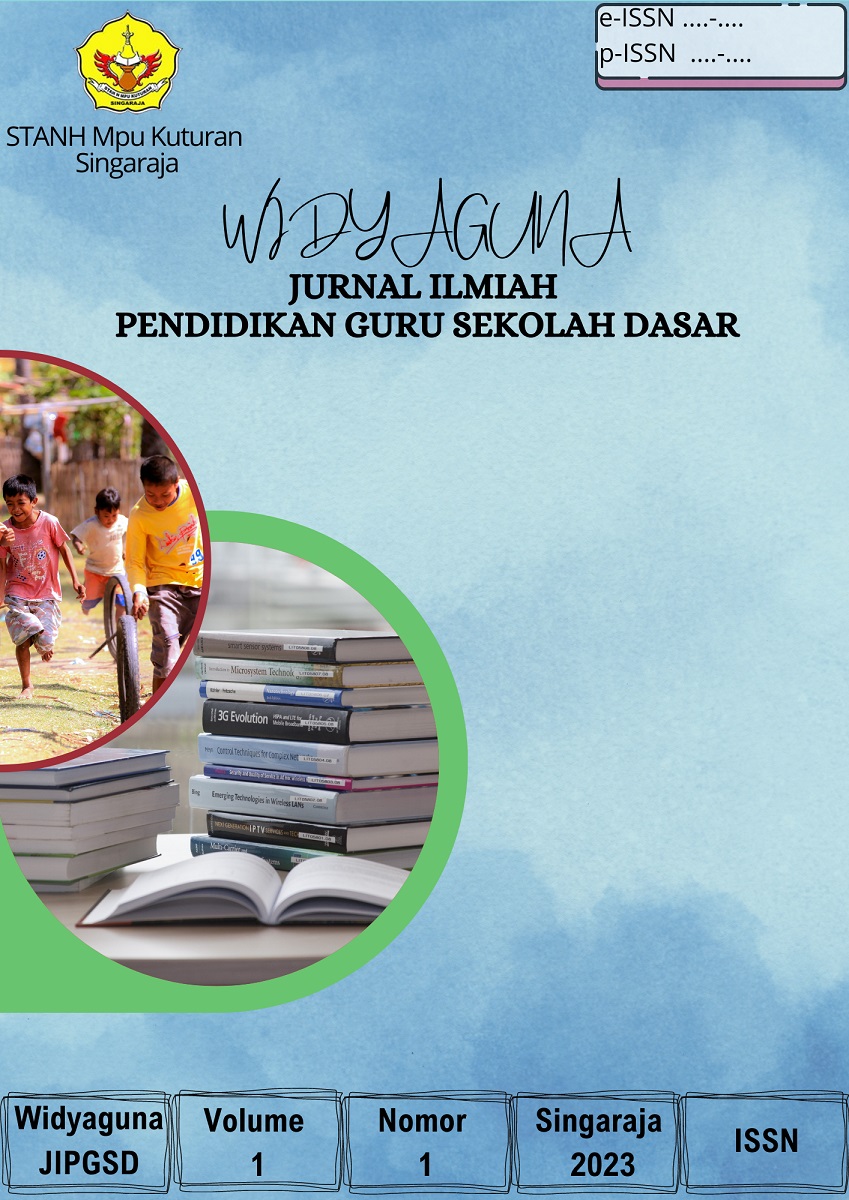
Widyaguna: Jurnal Ilmiah Pendidikan Guru Sekolah Dasar
Widyaguna: Jurnal Ilmiah Pendidikan Guru Sekolah Dasar adalah jurnal peer-review yang didedikasikan untuk bertukar hasil penelitian berkualitas tinggi di semua aspek pendidikan khususnya sekolah dasar. Jurnal ini menerbitkan tulisan ilmiah berupa teori dasar, eksperimen, aplikasi, serta pengembangan, dengan metode yang diusulkan secara sistematis, ulasan yang memadai, diskusi yang diperluas dan kesimpulan singkat.
-
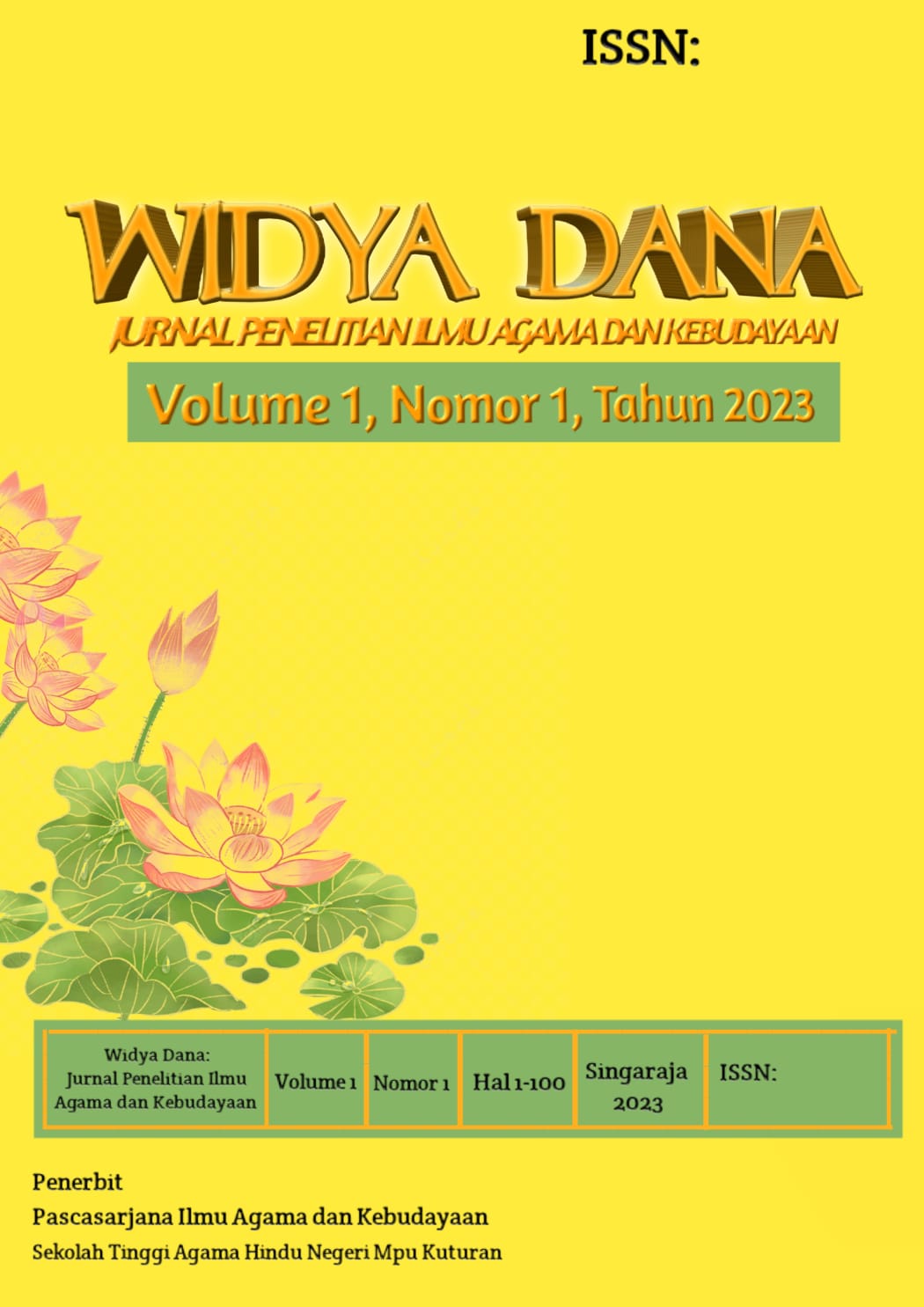
Widya Dana: Jurnal Penelitian Ilmu Agama dan Kebudayaan
Widya Dana: Jurnal Penelitian Ilmu Agama dan Kebudayaan dikelola oleh Pascasarjana STAHN Mpu Kuturan Singaraja yang dapat dijadikan referensi akademis maupun bahan memecahkan berbagai persoalan agama dan budaya yang dewasa ini semakin kompleks
p-ISSN : (Printed)
e-ISSN : (3026-6009) -
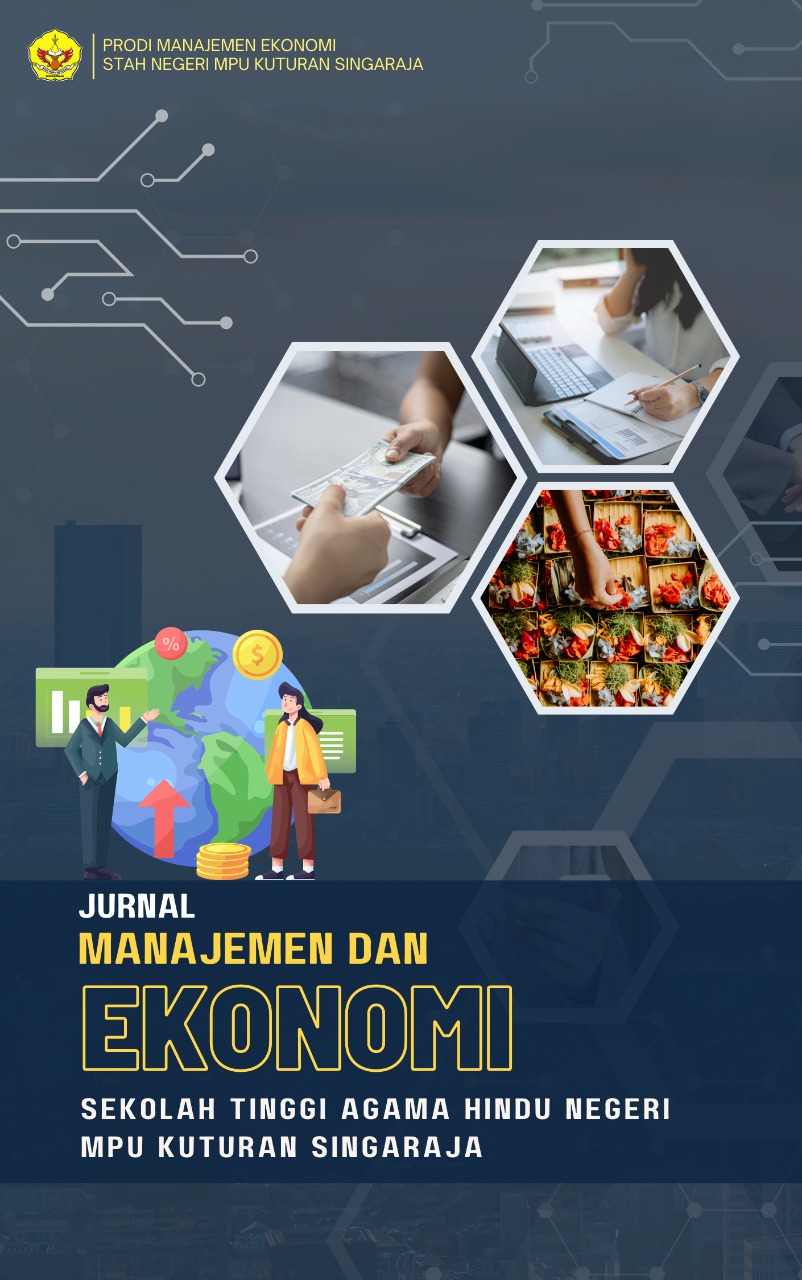
Jurnal Manajemen dan Ekonomi (JME)
Jurnal Manajemen dan Ekonomi (JME): Jurnal Ilmu Manajemen dan Ekonomi dikelola oleh Prodi Manajemen Ekonomi IAHN Mpu Kuturan yang dapat dijadikan referensi akademis maupun bahan memecahkan berbagai persoalan manajemen dan ekonomi yang dewasa ini dan semakin kompleks. Jurnal ini terbit 2 kali dalam setahun yakni bulan april dan oktober
-
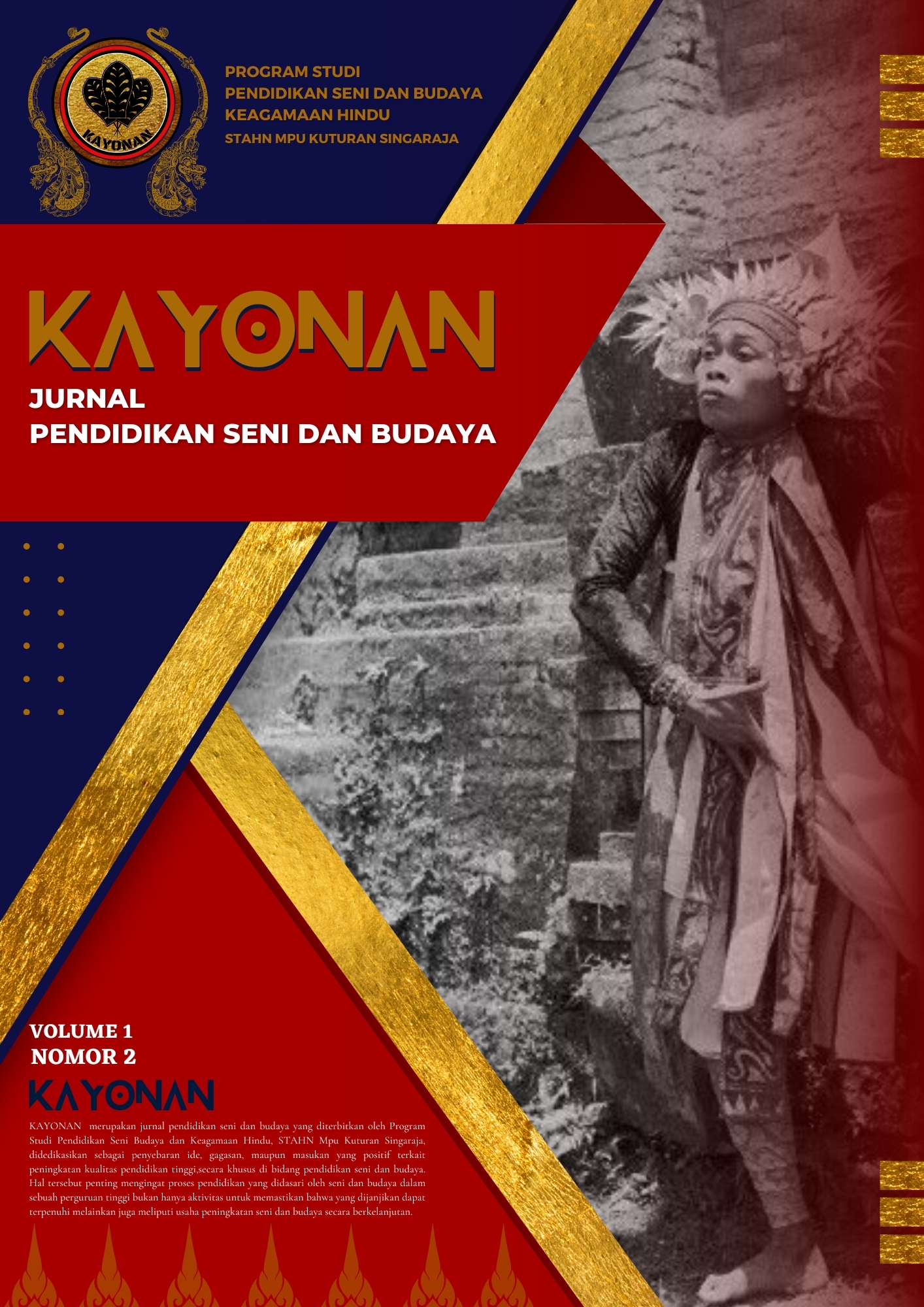
Kayonan: Jurnal Pendidikan Seni Budaya
KAYONAN merupakan jurnal pendidikan seni dan budaya yang diterbitkan oleh Program Studi Pendidikan Seni Budaya dan Keagamaan Hindu, IAHN Mpu Kuturan Singaraja, didedikasikan sebagai penyebaran ide, gagasan, maupun masukan yang positif terkait peningkatan kualitas pendidikan tinggi, secara khusus di bidang pendidikan seni dan budaya. Hal tersebut penting mengingat proses pendidikan yang didasari oleh seni dan budaya dalam sebuah perguruan tinggi bukan hanya aktivitas untuk memastikan bahwa yang dijanjikan dapat terpenuhi melainkan juga meliputi usaha peningkatan seni dan budaya secara berkelanjutan.
-
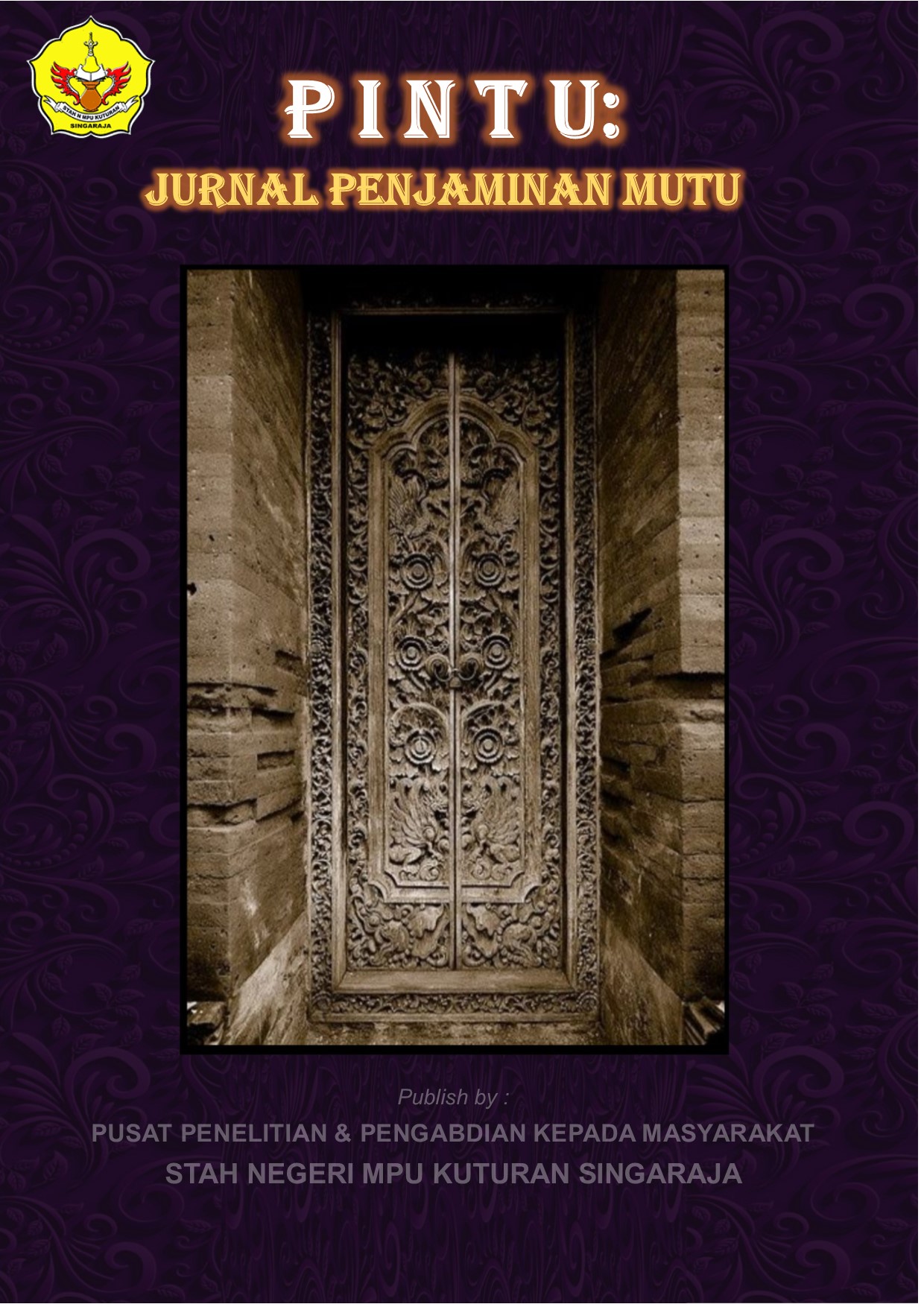
PINTU: Jurnal Penjaminan Mutu
PINTU: Jurnal Penjaminan Mutu (ISSN 2746-7074) didedikasikan sebagai penyebaran ide, gagasan, maupun masukan yang positif terkait peningkatan kualitas pendidikan tinggi, karena proses penjaminan mutu dalam sebuah perguruan tinggi bukan hanya aktivitas untuk memastikan bahwa yang dijanjikan dapat terpenuhi melainkan juga meliputi usaha peningkatan mutu secara berkelanjutan, baik melalui perencanaan dan pelaksanaan kegiatan, monitoring dan evaluasi internal, evaluasi diri, audit, dan benchmarking maupun penyebaran gagasan melalui tulisan ilmiah. Jurnal PINTU: Penjaminan Mutu terbit dua kali dalam setahun yakni bulan Maret dan September.
-
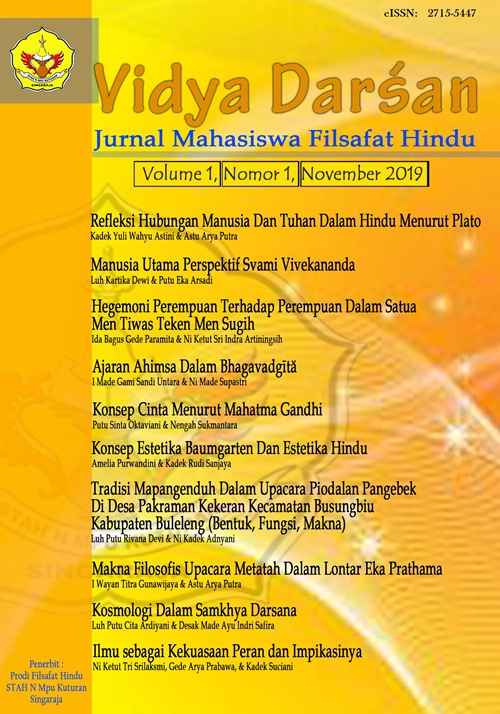
Vidya Darsan: Jurnal Mahasiswa Filsafat Hindu
Vidya Darsan: Jurnal Mahasiswa Filsafat Hindu merupakan jurnal ilmiah yang fokus publikasi ilmiahnya pada bidang ilmu Filsafat. Segala pemikiran ilmiah dalam jurnal diharapkan mampu memberikan kontribusi positif bagi pengembangan ilmu pengetahuan khususnya bidang ilmu Filsafat dan Filsafat Hindu. Jurnal Vidya Darsan terbit setahun dua kali yakni edisi Mei dan November. e-ISSN: 2715-5447 (Online)
-

COMMENT: Jurnal Mahasiswa Prodi Ilmu Komunikasi
COMMENT: Jurnal Mahasiswa Ilmu Komunikasi merupakan jurnal ilmiah yang ditulis oleh mahasiswa Program Studi Ilmu Komunikasi STAHN Mpu Kuturan Singaraja dengan fokus publikasi ilmiahnya pada bidang ilmu komunikasi.
-
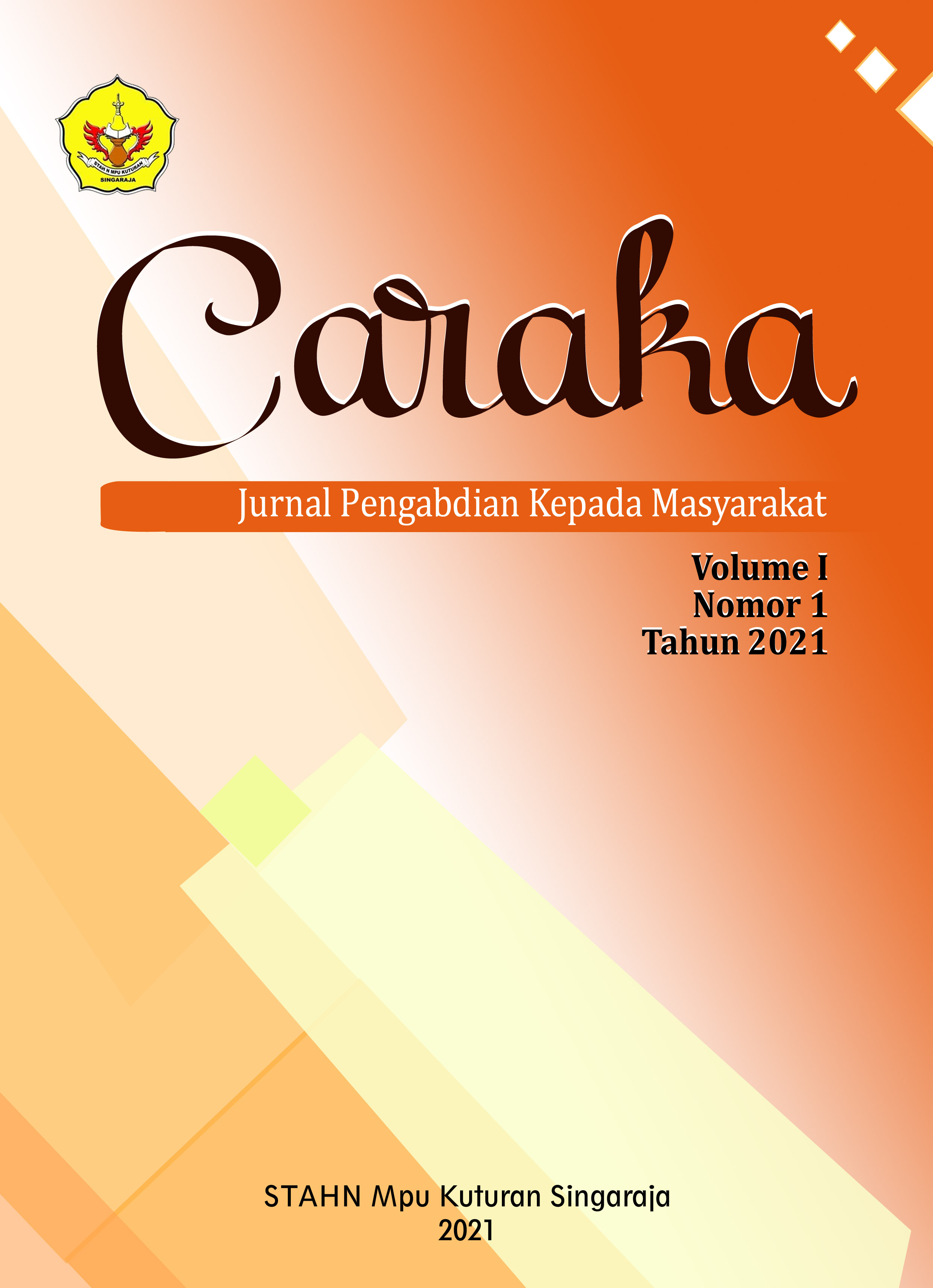
Caraka: Jurnal Pengabdian Kepada Masyarakat
Caraka: Jurnal Pengabdian Kepada Masyarakat merupakan wadah publikasi hasil pengabdian masyarakat yang diterbitkan oleh Sekolah Tinggi Agama Hindu Negeri Mpu Kuturan Singaraja. Caraka: Jurnal Pengabdian Kepada Masyarakat menerima artikel dari dosen dan para praktisi yang ahli di bidangnya, dari segala institusi, baik dari dalam maupun luar negeri.
-
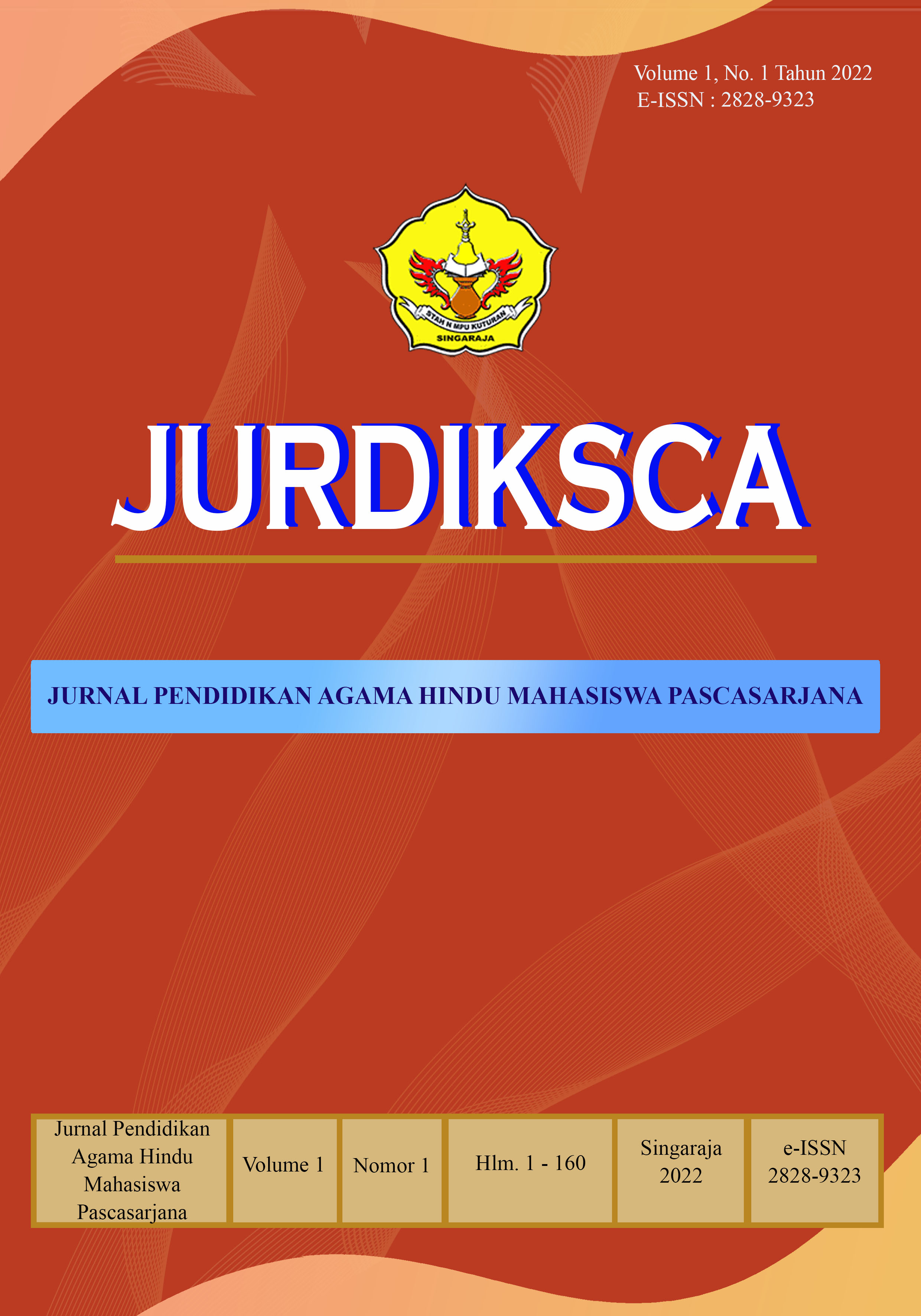
JURDIKSCA: Jurnal Pendidikan Agama Hindu Mahasiswa Pascasarjana
Jurdiksca: Jurnal Pendidikan Agama Hindu Mahasiswa Pascasarjana merupakan jurnal ilmiah yang ditulis oleh mahasiswa Program Pascasarjana STAHN Mpu Kuturan Singaraja dengan fokus publikasi ilmiahnya pada bidang ilmu Pendidikan Agama Hindu. Jurdiksca terbit 2 kali dalam setahun yaitu bulan Mei dan November
e-ISSN: 2828-9323 (Online) -
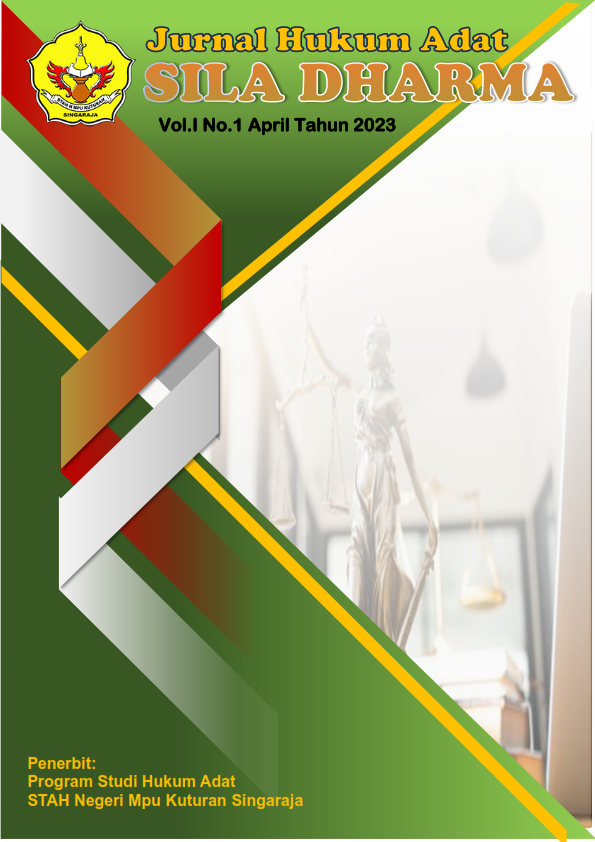
-
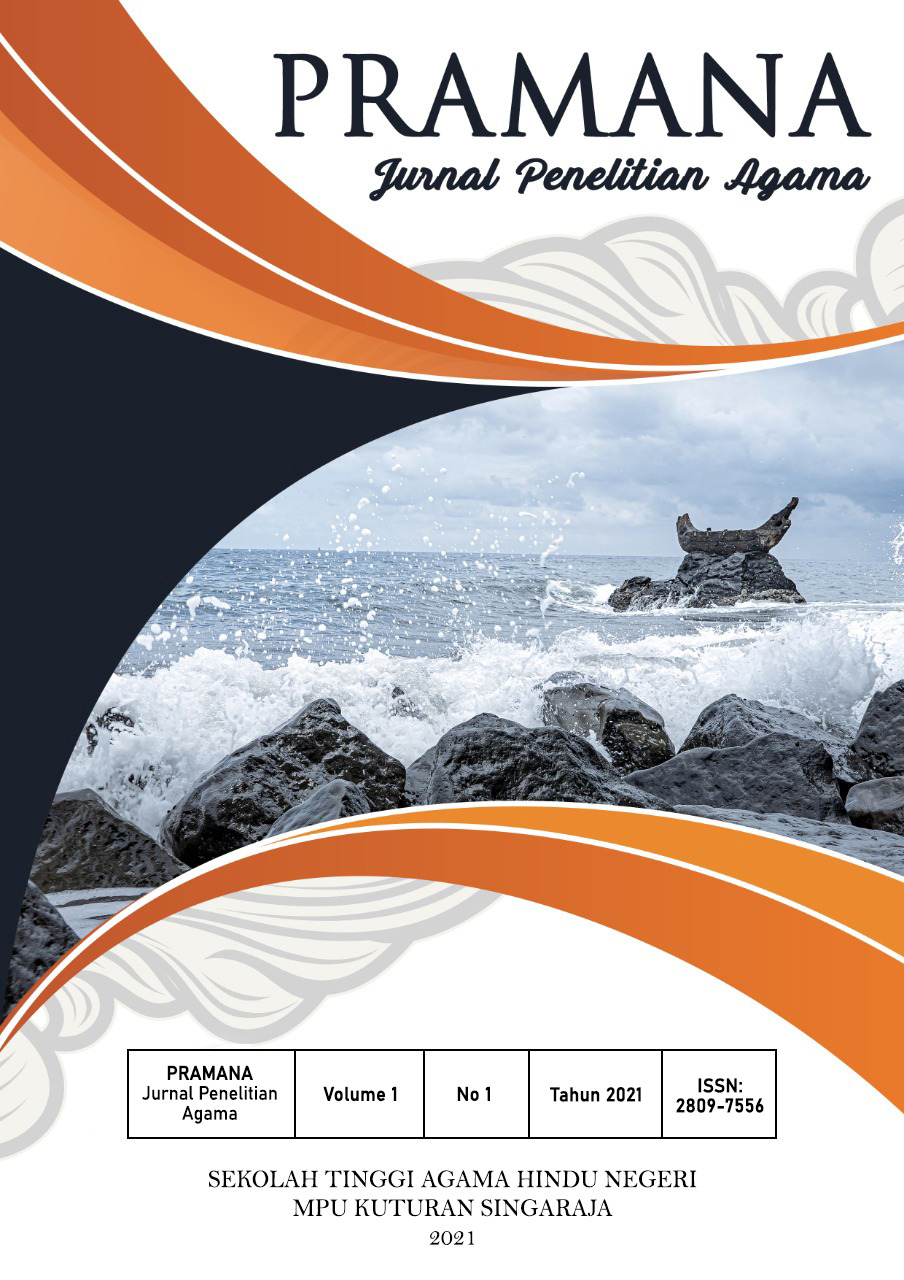
Pramana: Jurnal Hasil Penelitian
Pramana: Jurnal Hasil Penelitian merupakan wadah publikasi hasil penelitian Agama Hindu yang diterbitkan oleh Sekolah Tinggi Agama Hindu Negeri Mpu Kuturan Singaraja. Pramana: Jurnal Hasil Penelitian menerima artikel dari dosen dan para praktisi yang ahli di bidangnya, dari segala institusi, baik dari dalam maupun luar negeri. Artikel yang telah memenuhi persyaratan akan dinilai kelayakannya oleh reviewer yang ahli di bidangnya melalui proses double blind-review. Pramana: Jurnal Hasil Penelitian terbit dua kali dalam satu tahun, Maret dan September. Naskah yang masuk akan diterima oleh editor untuk kemudian kan dilakukan pemeriksaan kemiripan naskah dengan aplikasi Plagiarism Checker. Proses review dilakukan dengan menggunakan peer review.
-
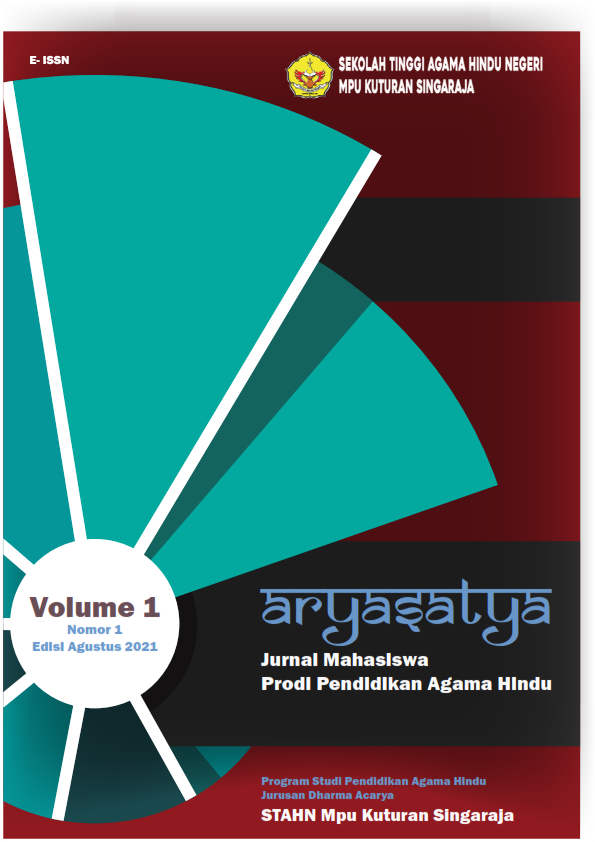
Arya Satya
Arya Satya adalah jurnal ilmiah yang berisi dan menyebarluaskan hasil penelitian, studi mendalam, dan ide-ide atau karya inovatif di bidang pendidikan Agama Hindu yang diterbitkan oleh STAHN Mpu Kuturan Singaraja
-
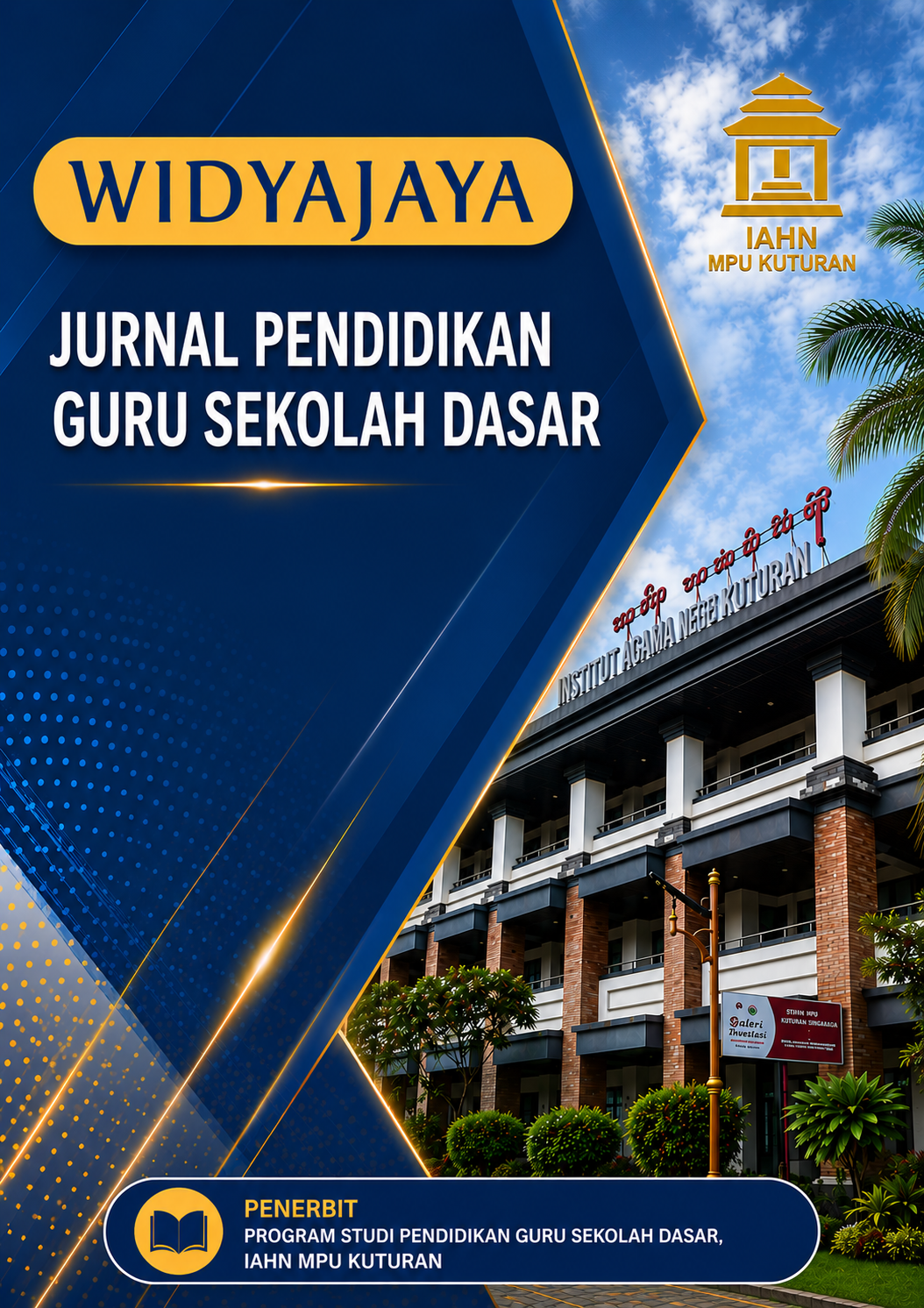
Widyajaya: Jurnal Pendidikan Guru Sekolah Dasar
WIDYAJAYA: Jurnal Pendidikan Guru Sekolah Dasar adalah jurnal ilmiah yang berisi dan menyebarluaskan hasil penelitian, studi mendalam, dan ide-ide atau karya inovatif di bidang pendidikan dasar yang diterbitkan oleh Program Studi IAHN Mpu Kuturan. Karya inovatif mahasiswa, guru, dosen, peneliti, akademisi, dan praktisi pengembangan sektor pendidikan dasar yang mampu memberikan kontribusi positif bagi sekolah dan lembaga pendidikan.
-
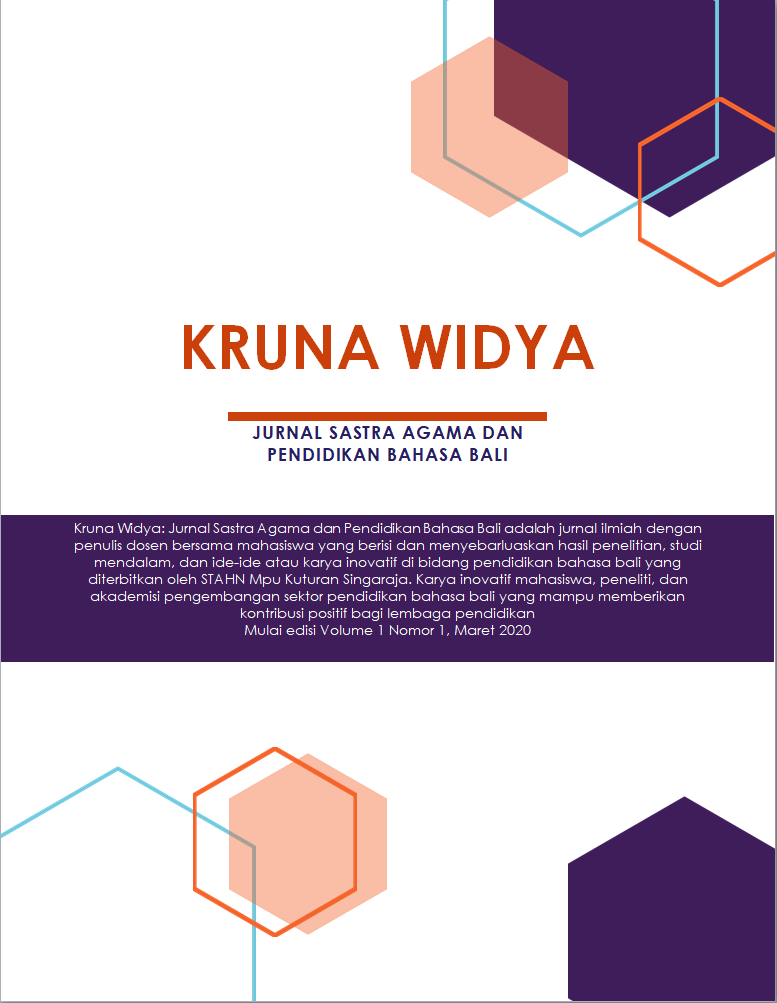
Kruna Widya: Jurnal Sastra Agama dan Pendidikan Bahasa Bali
Kruna Widya: Jurnal Sastra Agama dan Pendidikan Bahasa Bali adalah jurnal ilmiah yang berisi dan menyebarluaskan hasil penelitian, studi mendalam, dan ide-ide atau karya inovatif di bidang pendidikan bahasa bali yang diterbitkan oleh STAHN Mpu Kuturan Singaraja. Karya inovatif mahasiswa, peneliti, dan akademisi pengembangan sektor pendidikan bahasa bali yang mampu memberikan kontribusi positif bagi lembaga pendidikan
-
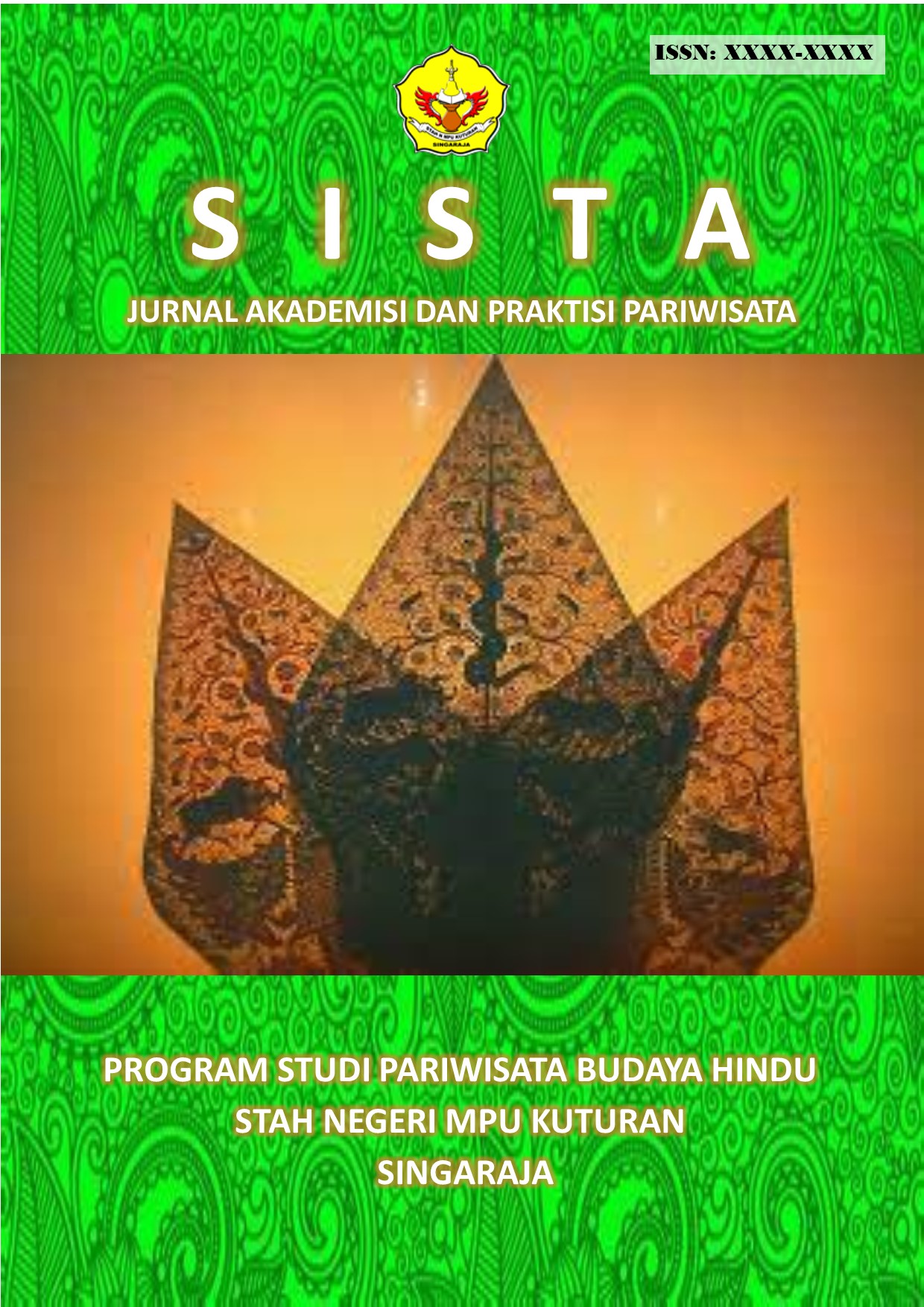
SISTA: Jurnal Akademisi dan Praktisi Pariwisata
SISTA : Jurnal Akademisi dan Praktisi Pariwisasta dikelola oleh Program Studi Pariwisata Budaya dan Keagamaan, Fakultas Dharma Duta, Institut Agama Hindu Negeri Mpu Mpu Kuturan. Publikasi jurnal ini merupakan jurnal ilmiah di bidang kajian kepariwisataan. Naskah dapat berupa makalah penelitian, artikel review, serta makalah konseptual, teknis dan metodologis pada semua aspek meliputi temuan penelitian, desain eksperimental, analisis dan aplikasi terkini dalam studi tur dan perjalanan. Ruang lingkup wilayah tersebut meliputi perencanaan pariwisata, geografi, pengelolaan pariwisata, destinasi, travelling, lingkungan, ekonomi, gastronomi, pusaka, dan budaya. Jurnal ini diterbitkan dua kali setahun pada bulan Mei dan Nopember.
-
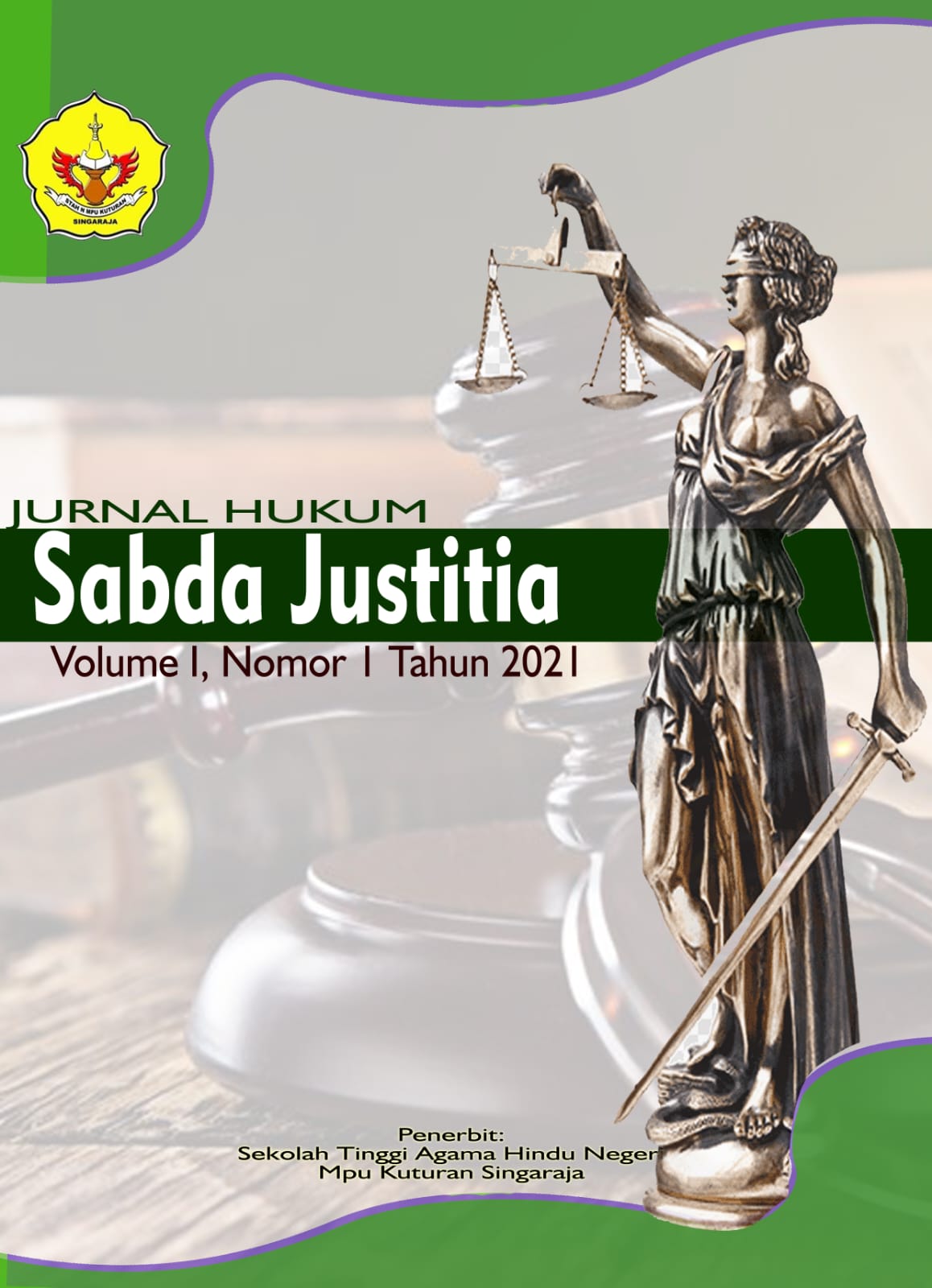
Sabda Justitia
Jurnal Sabda Justitia sebgai sumber literasi di bidang Hukum yang fokus mengkaji fokus mengkaji permasalahan terkait Hukum Adat, Hukum Hindu, Hukum Privat, Hukum Publik dan Ilmu Negara. Selain sebagai sumber literasi Hukum jurnal ini juga mengkaji mengenai Sosiologi, Antropologi, Ekonomi dan Etika dalam Perspektif Hukum, Hukum Adat, dan Hukum Hindu
-

SWARA WIDYA: Jurnal Agama Hindu
Jurnal Mahasiswa Teologi Hindu sebagai sumber literasi bidang seni, budaya dan Agama Hindu yang diperuntukkan kepada semua mahasiswa agar bisa mengekspresikan diri dan pengembangan wawasan pada keahlian karya tulis.
-
Rasividya : Jurnal Pendidikan
Rasividya : Jurnal Pendidikan merupakan jurnal yang membahas ilmu dibidang Keguruan dan Pendidikan, jurnal ini sebagai wadah untuk menuangkan hasil penelitian baik secara konseptual maupun teknis yang berkaitan dengan Keguruan dan Ilmu Pendidikan. Rasividya : Jurnal Pendidikan terbit 2 kali dalam setahun yaitu pada bulan Maret dan September. Naskah yang masuk akan diterima oleh editor untuk kemudian kan dilakukan pemeriksaan kemiripan naskah dengan aplikasi Plagiarism Checker. Proses review dilakukan dengan menggunakan peer review.
Rasividya : Jurnal Pendidikan menerima naskah dengan topik Curriculums, Teaching, and Learning, Educational Technology, Psychology and Counseling, dan topik lainnya yang relevan dengan Ilmu Keguruan dan Pendidikan.
-
Educemara: Jurnal Pengabdian Masyarakat
Educemara: Jurnal Pengabdian Masyarakat adalah jurnal nasional yang berisi hasil-hasil kegiatan pengabdian dan pemberdayaan masyarakat berupa penerapan berbagai bidang ilmu diantaranya pendidikan, sosial dan humaniora.